

Explore the Full Report
Dive deeper into the technical details, methodology, and comprehensive analysis.

"The first integrative overview of brain emulation since connectomics, brain activity mapping and machine learning really started to work."
Adam Marblestone, CEO Convergent Research

"The most useful quantitative update I've seen on the whole brain emulation roadmap. A treasure trove of useful information."
Anders Sandberg, Institute of Futures Studies

"This is the material for anyone seeking to develop a computational approach integrating microscopic (neurotransmitters), mesoscopic (neuronal activity), and macroscopic (imaging, behavioral, and environmental) data."
Prof. Jianfeng Feng, Warwick & Fudan Universities
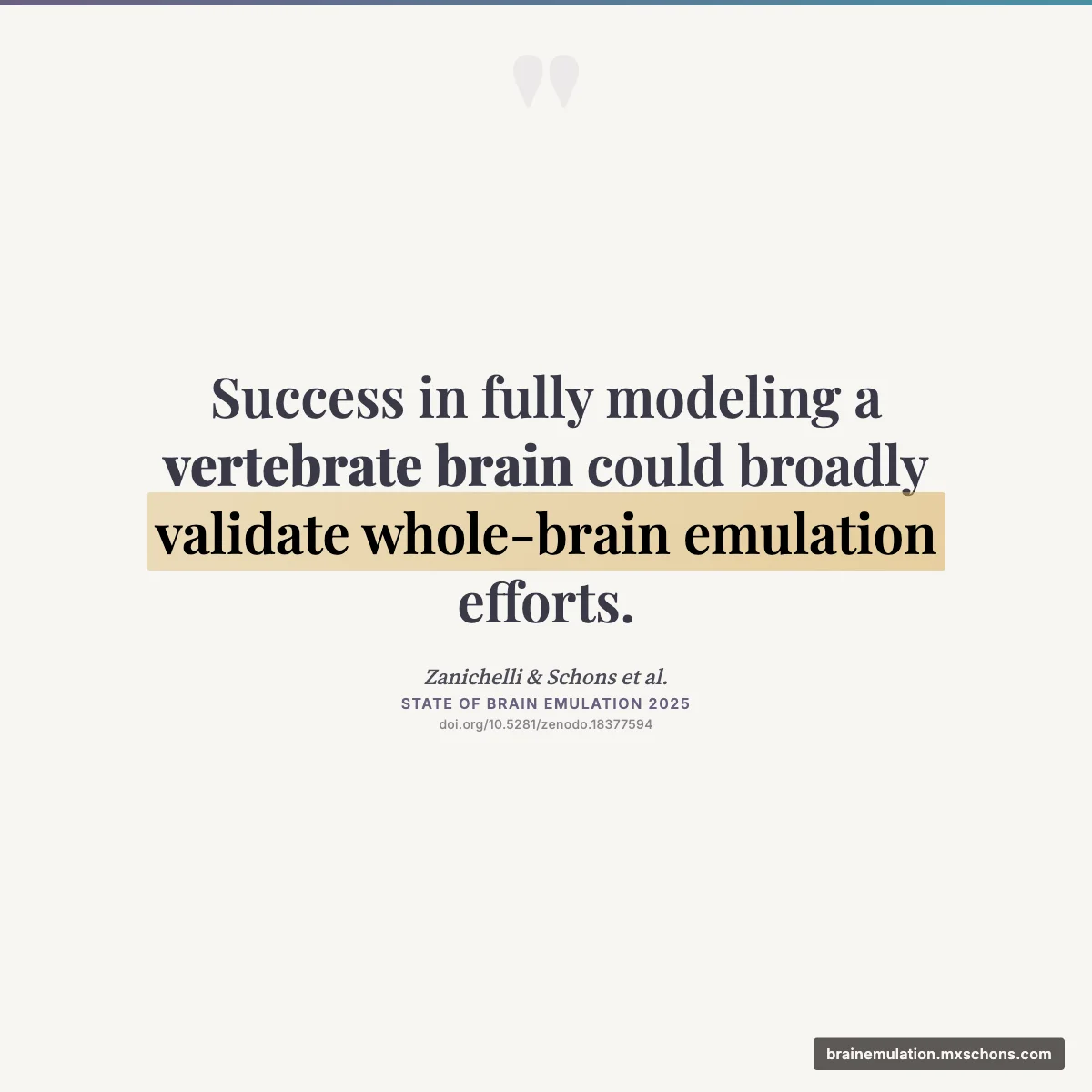
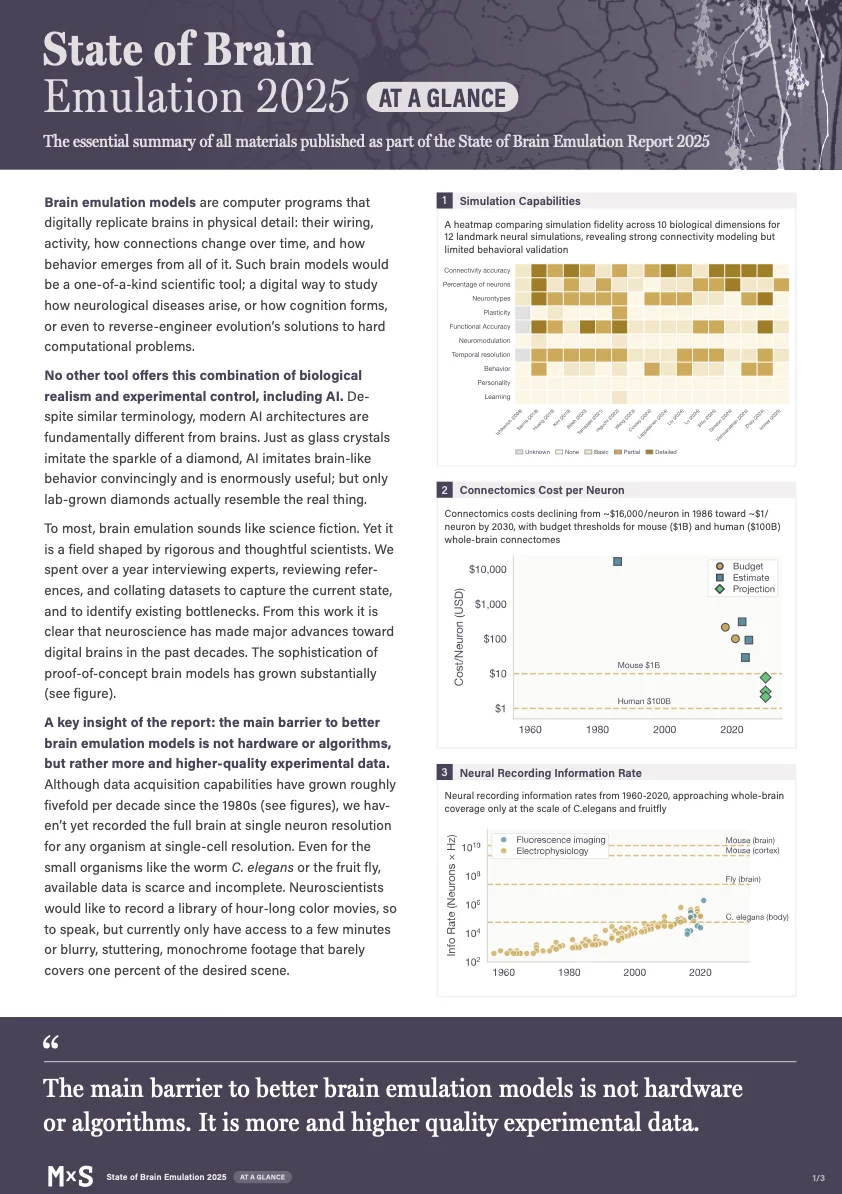
Brain emulation models are computer programs that digitally replicate brains in physical detail: their wiring, activity, how connections change over time, and how behavior emerges from all of it. Such brain models would be a one-of-a-kind scientific tool; a digital way to study how neurological diseases arise, or how cognition forms, or even to reverse-engineer evolution's solutions to hard computational problems.
No other tool offers this combination of biological realism and experimental control, including AI.
The main barrier to better brain emulation models is more and higher-quality experimental data. No organism’s full brain has been recorded at single-neuron resolution.
For organisms under 1 million neurons — fruit flies, small fish, bees — capturing all aspects of the brain faithfully is increasingly plausible, potentially within the decade, at a cost in the low $100Ms.
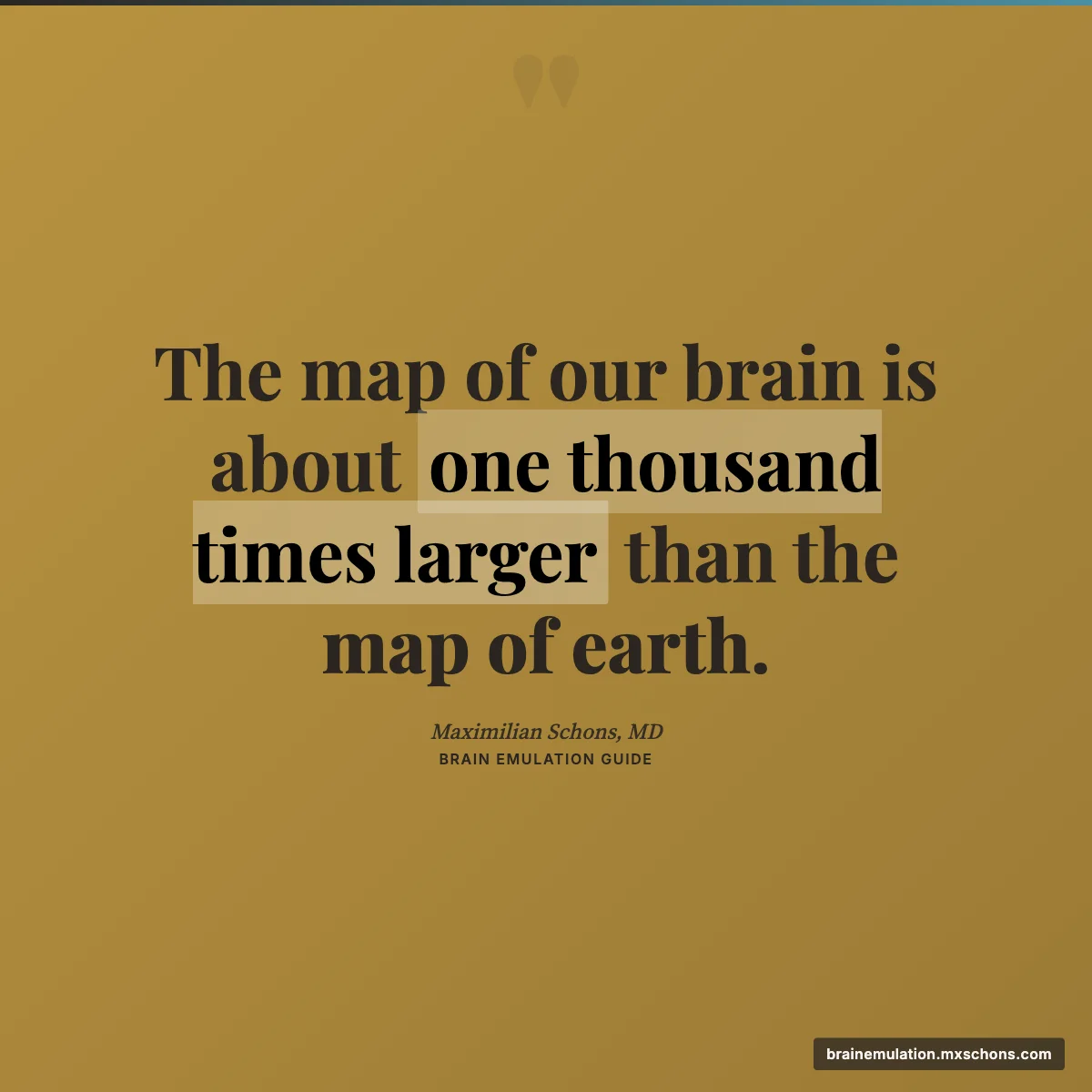
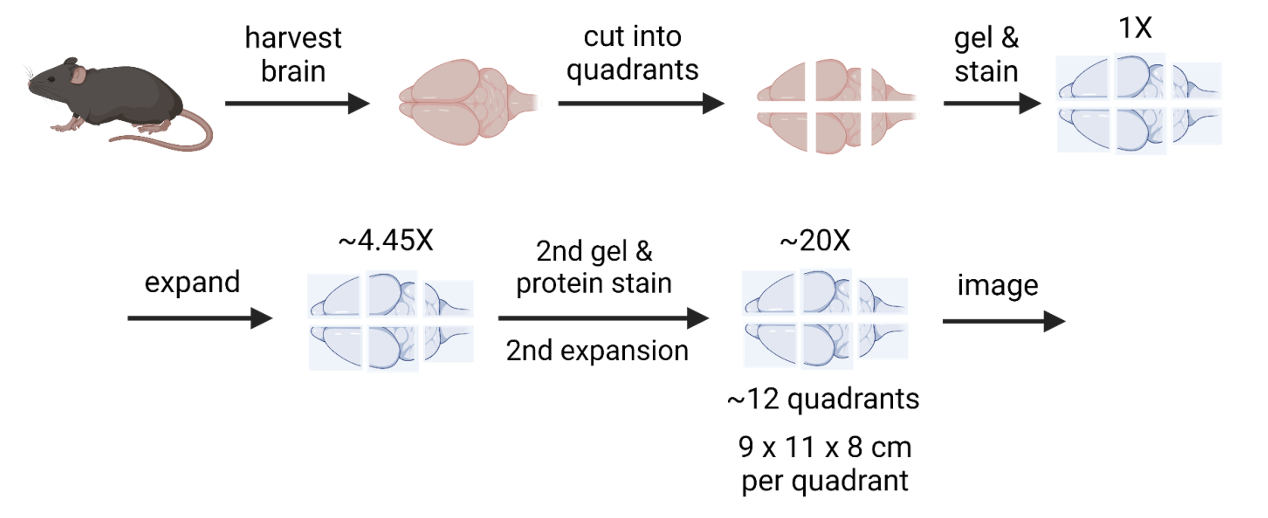
A mouse brain has 500x more neurons than a fruit fly; a human brain has about a million times more. Mapping a mouse brain at the needed resolution is comparable in scale to a high-resolution reconstruction of Earth.
Everyone worldwide focused specifically on brain emulation could fit in a single workshop room. Total global funding for basic neuroscience has been roughly $0.5B/year — about 1% of the NIH’s annual budget.
Any individual or funder entering this field can have outsized impact given its small size and early stage.
Choose your entry point into the research
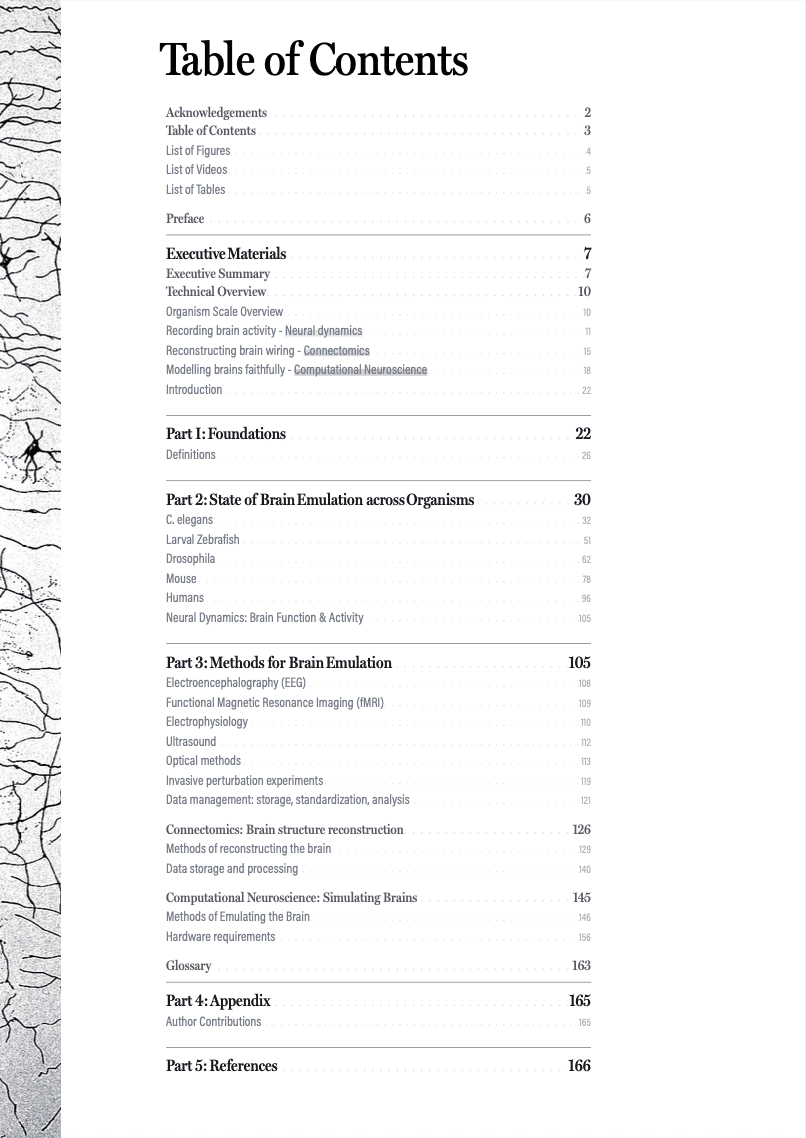
The complete 182-page technical analysis with all data, figures, and methodology.
Download PDF →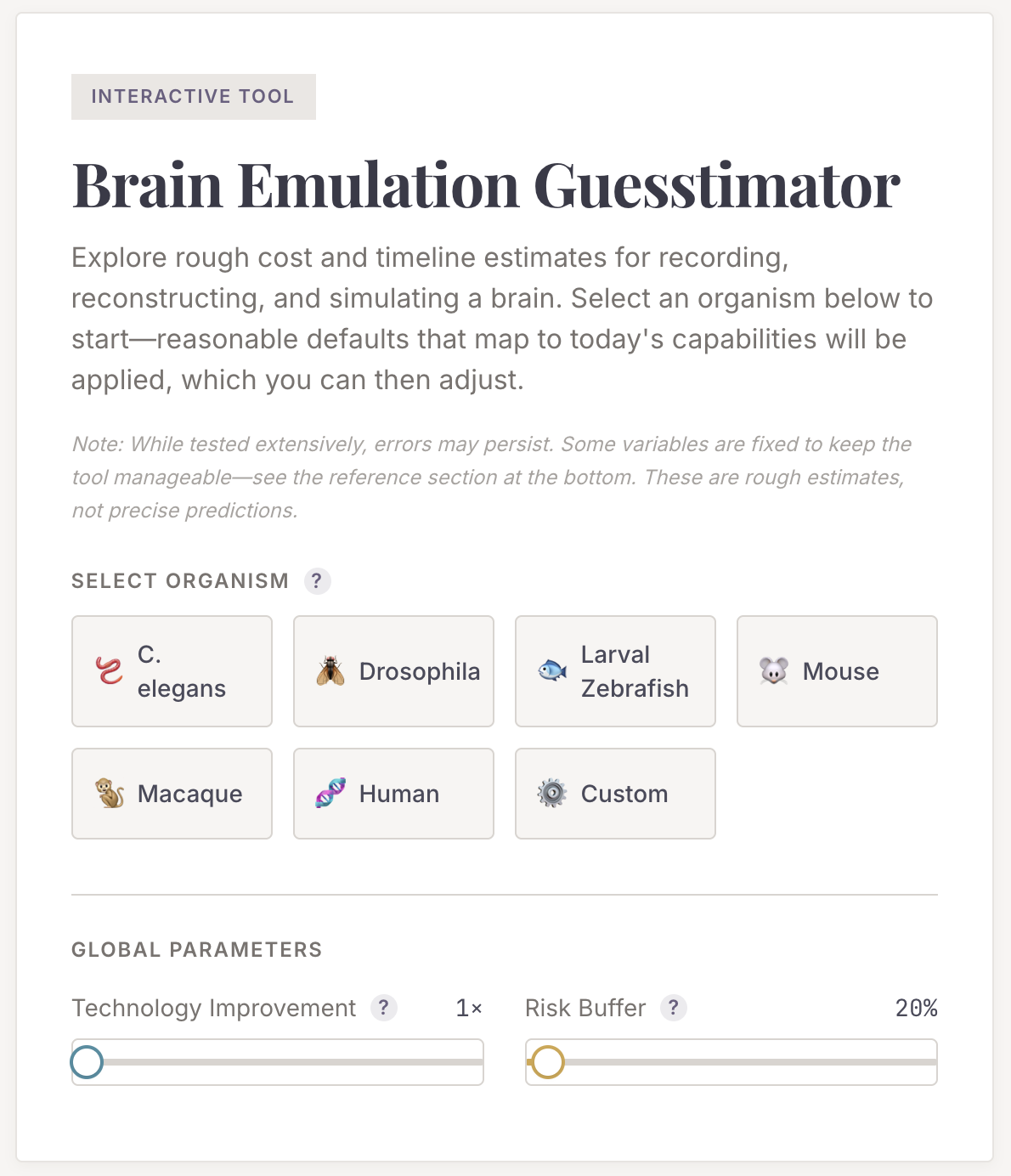
Estimate costs for brain emulation projects with our calculator.
Try it →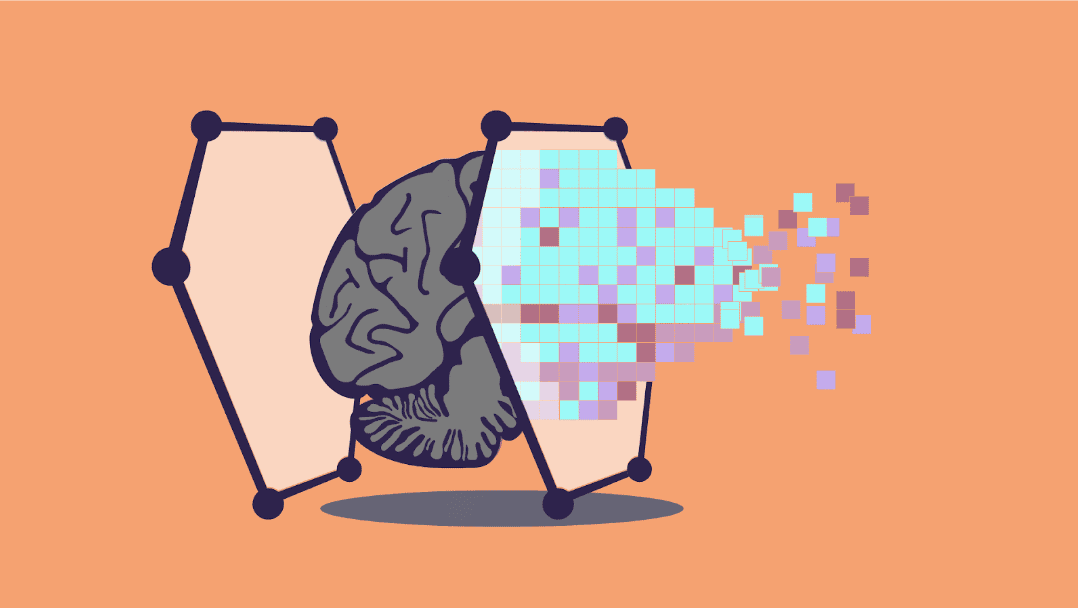 Building brains on a computer
Coming Soon
Building brains on a computer
Coming Soon
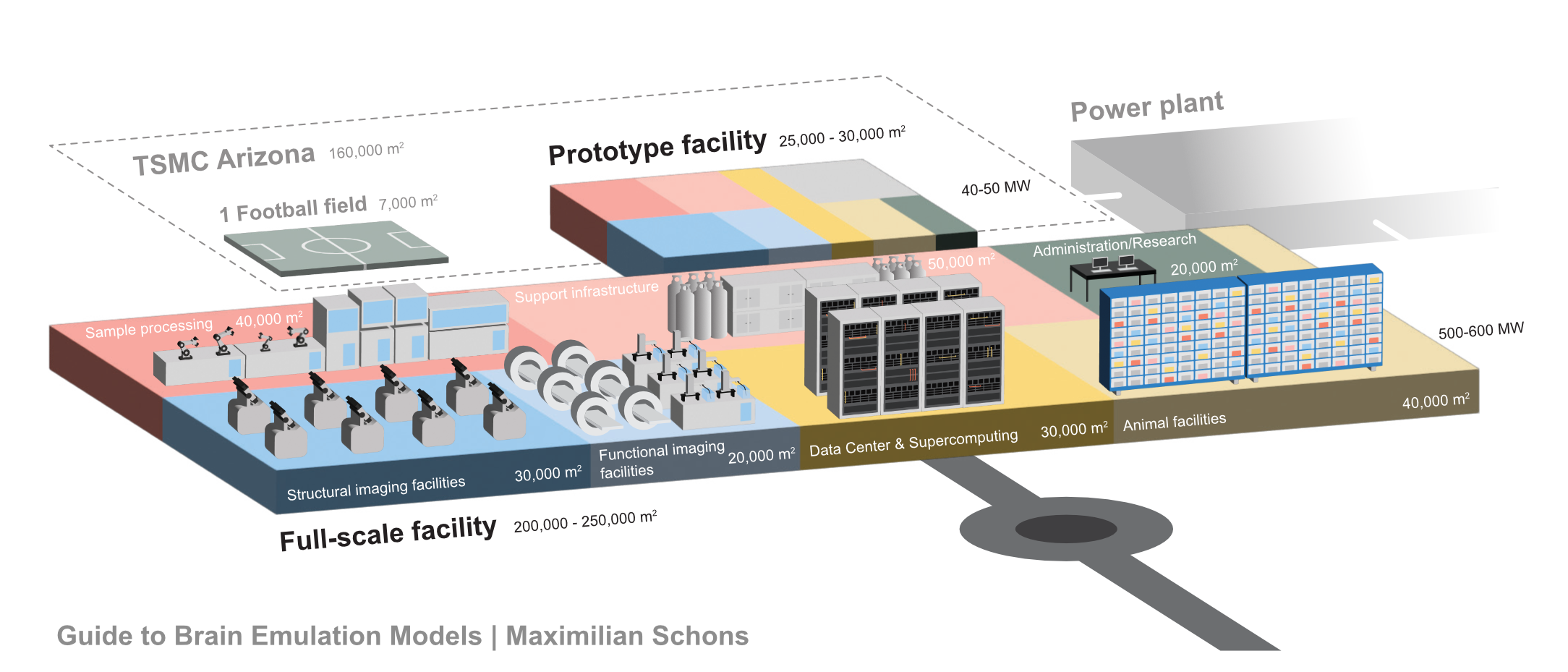 2h Guide to Brain Emulation





With contributions from:
Adam Glaser, Adam Marblestone, Anders Sandberg, Andrew Payne, Andy McKenzie, Anshul Kashyap, Camille Mitchell, Christian Larsen, Claire Wang, Connor Flexman, Daniel Leible, Davi Bock, Davy Deng, Ed Boyden, Florian Engert, Glenn Clayton, James Lin, Jianfeng Feng, Jordan Matelsky, Ken Hayworth, Kevin Esvelt, Konrad Kording, Lei Ma, Logan Thrasher Collins, Michael Andregg, Michael Skuhersky, Michał Januszewski, Nicolas Patzlaff, Niko McCarty, Oliver Evans, Ons M'Saad, Patrick Mineault, Quilee Simeon, Richie Kohman, Srinivas Turaga, Tomaso Poggio, Viren Jain, Yangning Lu, Zeguan Wang
View all contributors →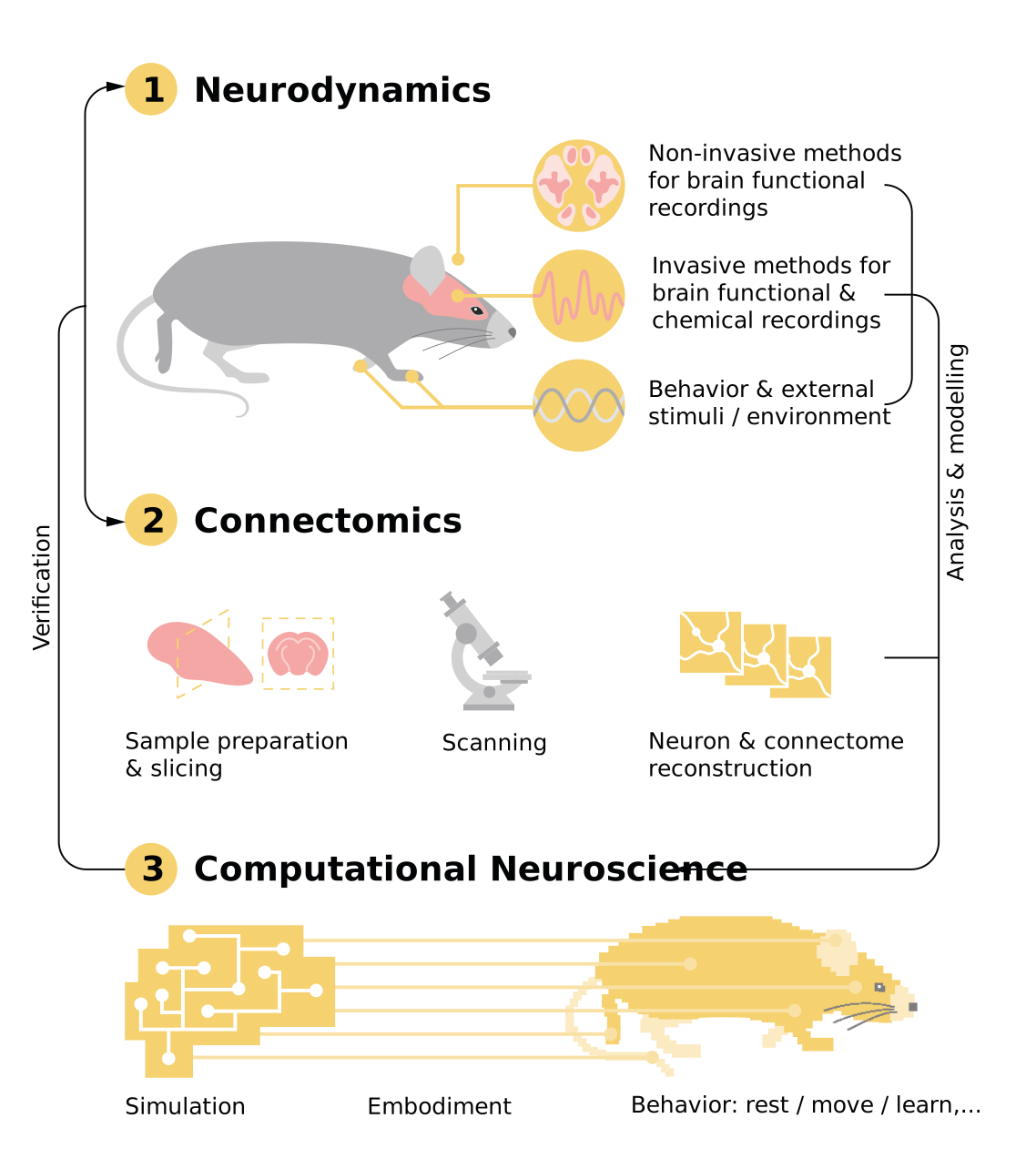
Accurate brain emulations would occupy a unique position in science: combining the experimental control of computational models with the biological fidelity needed to study how neural activity gives rise to cognition, disease, and perhaps consciousness.
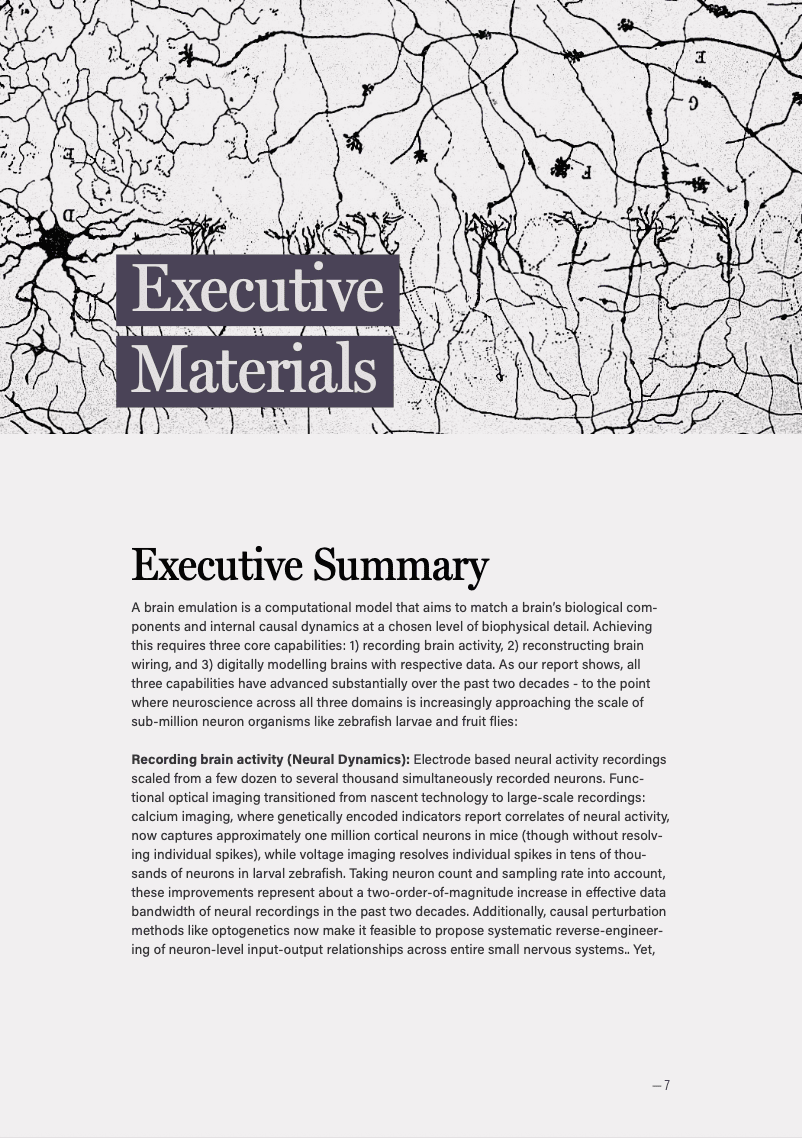
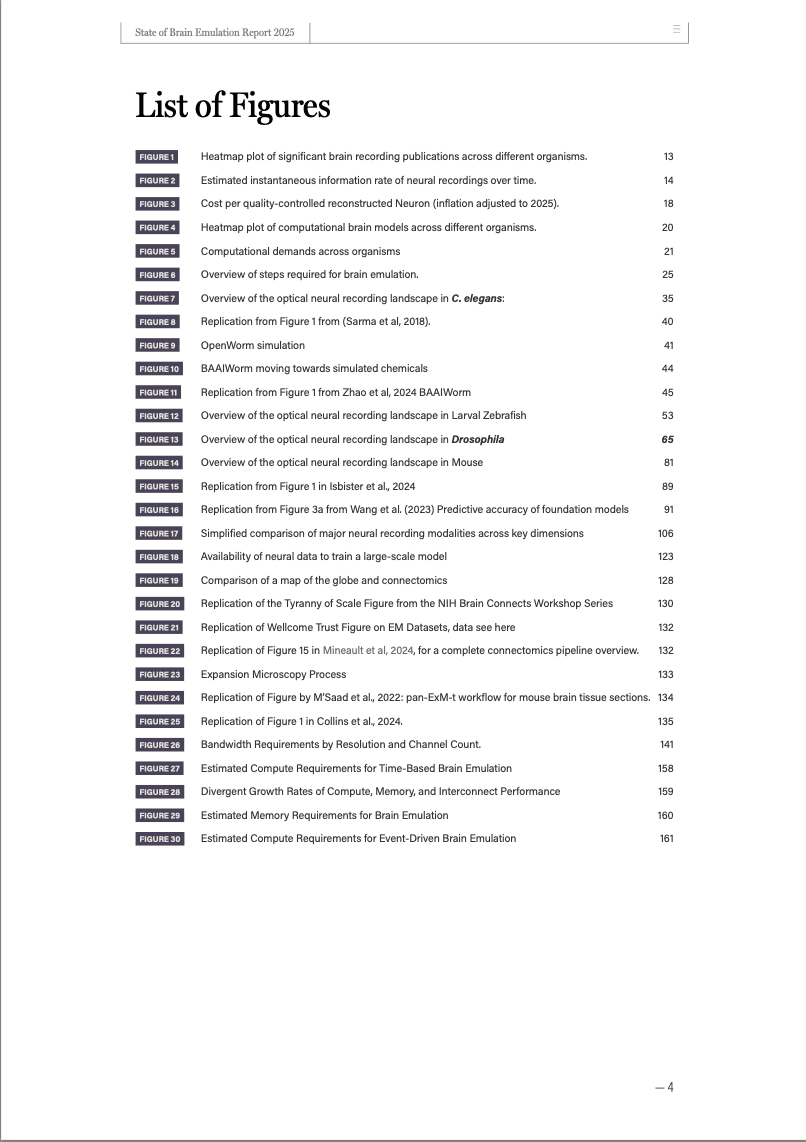
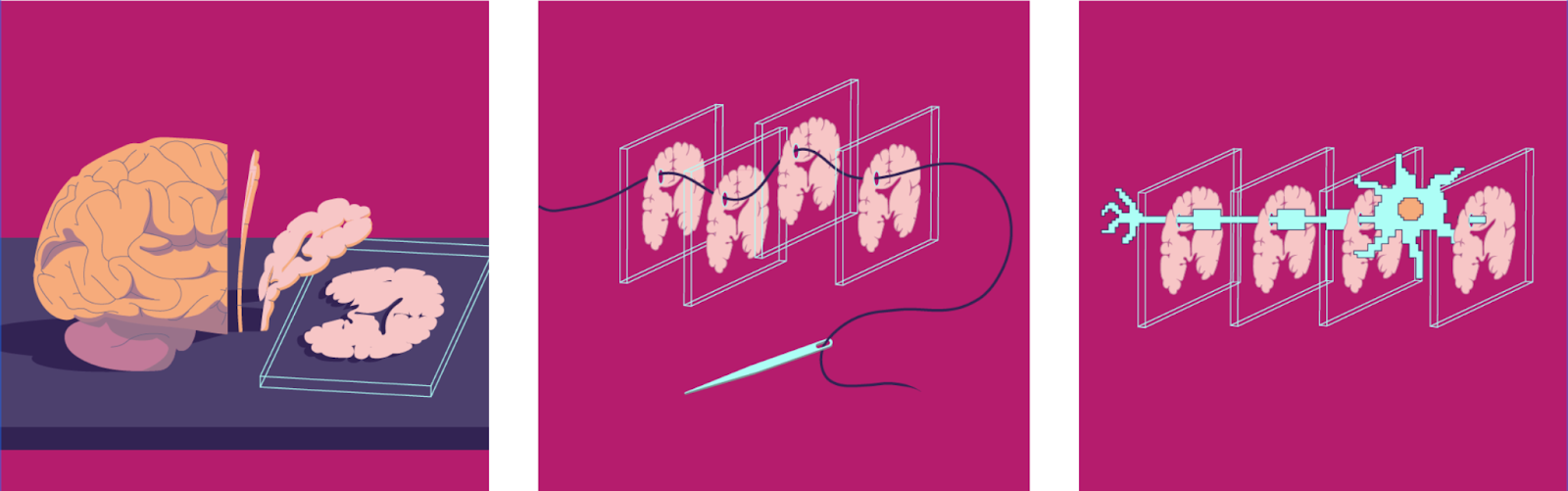
Building a brain emulation requires three core capabilities: 1) recording brain activity, 2) reconstructing brain wiring, and 3) digitally modelling brains with respective data. In this report, we explain how all three capabilities have advanced substantially over the past two decades, to the point where neuroscientists are collecting enough data to emulate the brains of sub-million neuron organisms, such as zebrafish larvae and fruit flies.
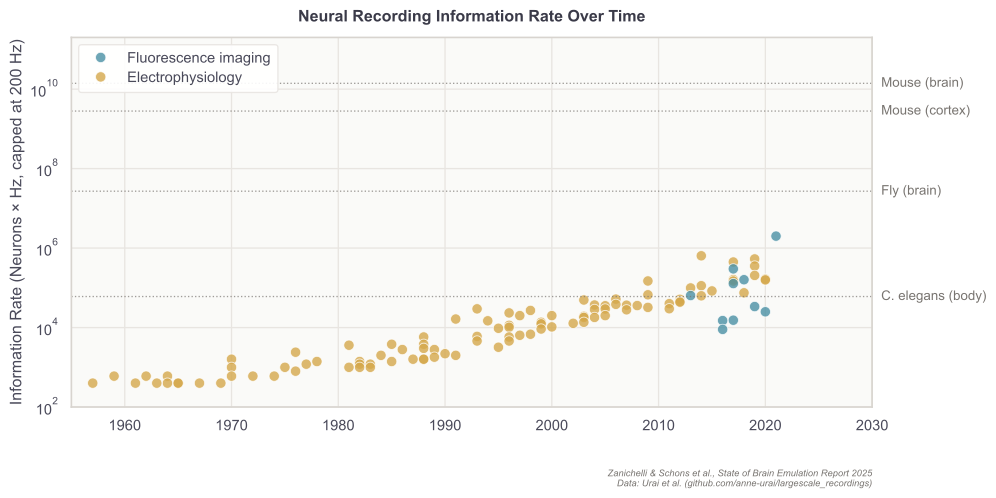
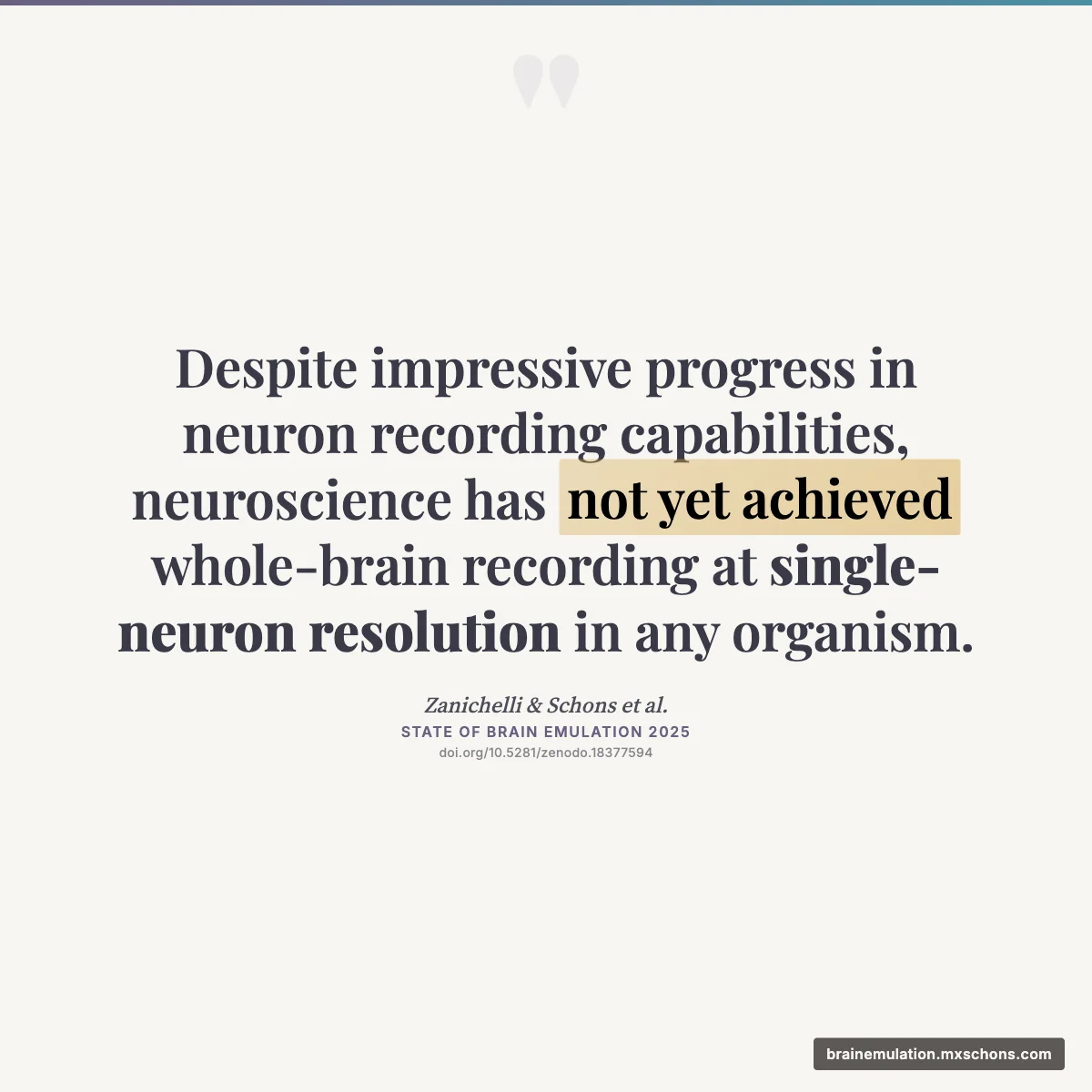
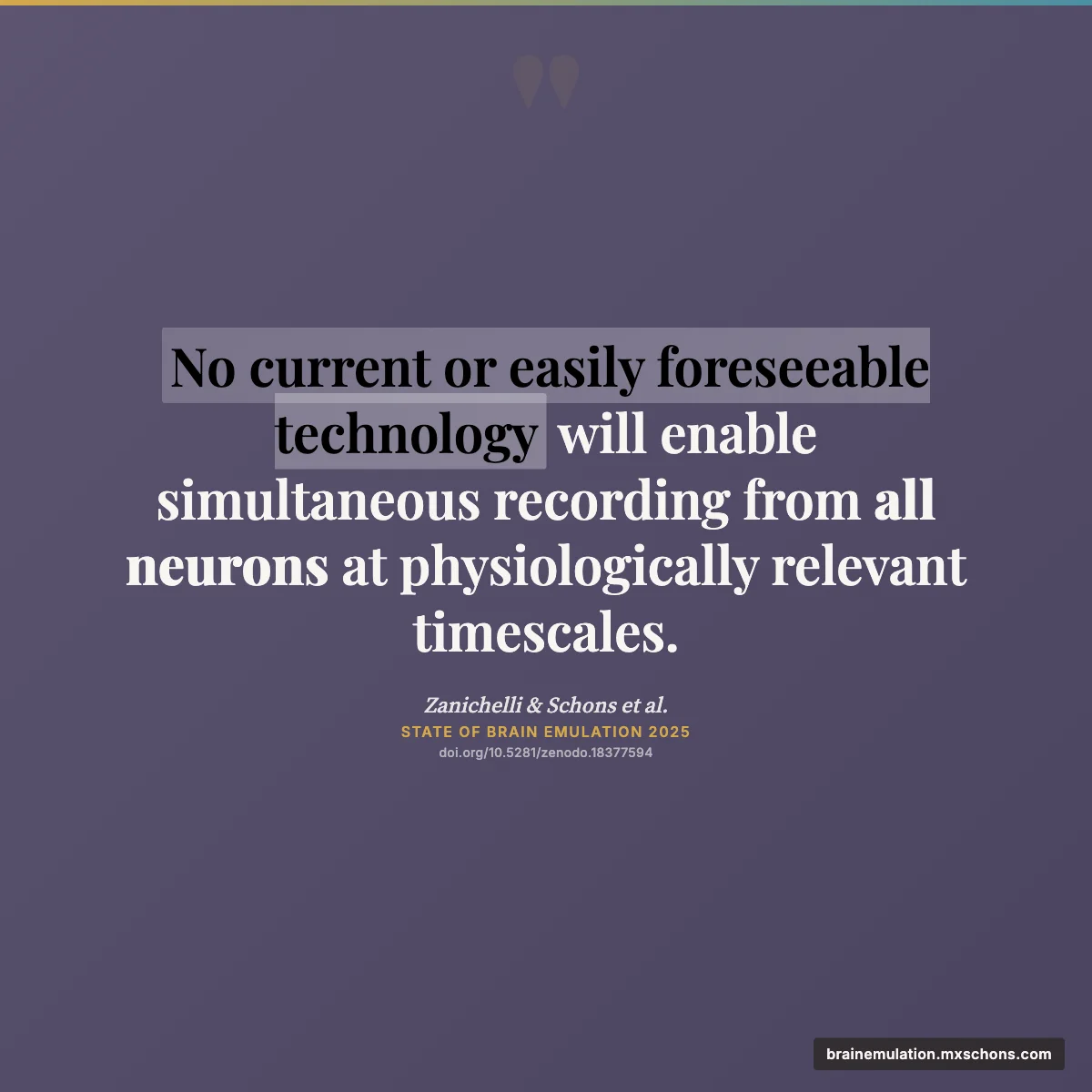
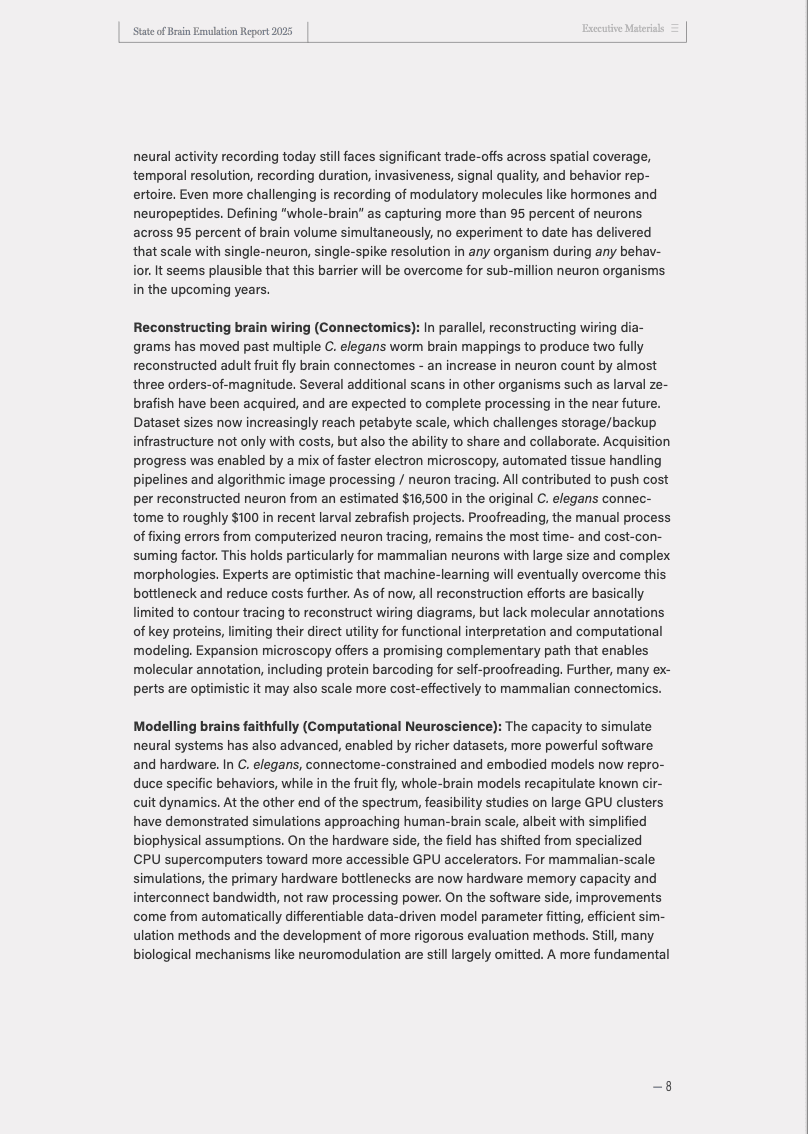
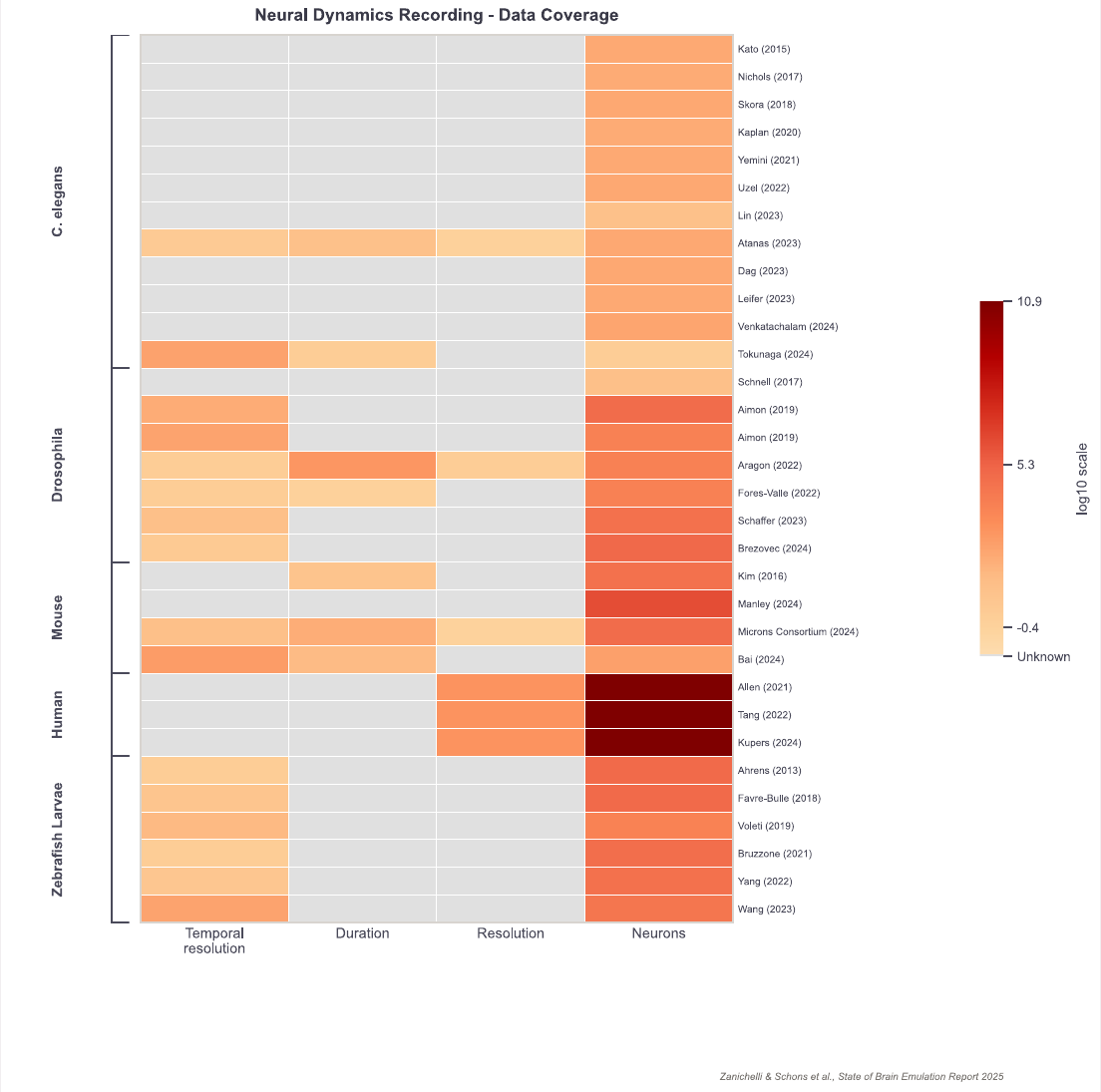
Despite impressive progress in neuron recording capabilities, neuroscience has not yet achieved whole-brain recording (≥ 95% of neurons and brain volume) at single-neuron resolution in any organism. The closest achievements include larval zebrafish with approximately 80% brain coverage and C. elegans with roughly 50% of nervous system neurons recorded at single-cell resolution.
Even these figures come with substantial limitations: temporal resolution is typically well below neuronal firing rates (often 1-30 Hz for calcium imaging), recording durations remain short (minutes to hours), and the need for head-fixation severely constrains behavior repertoires.
more →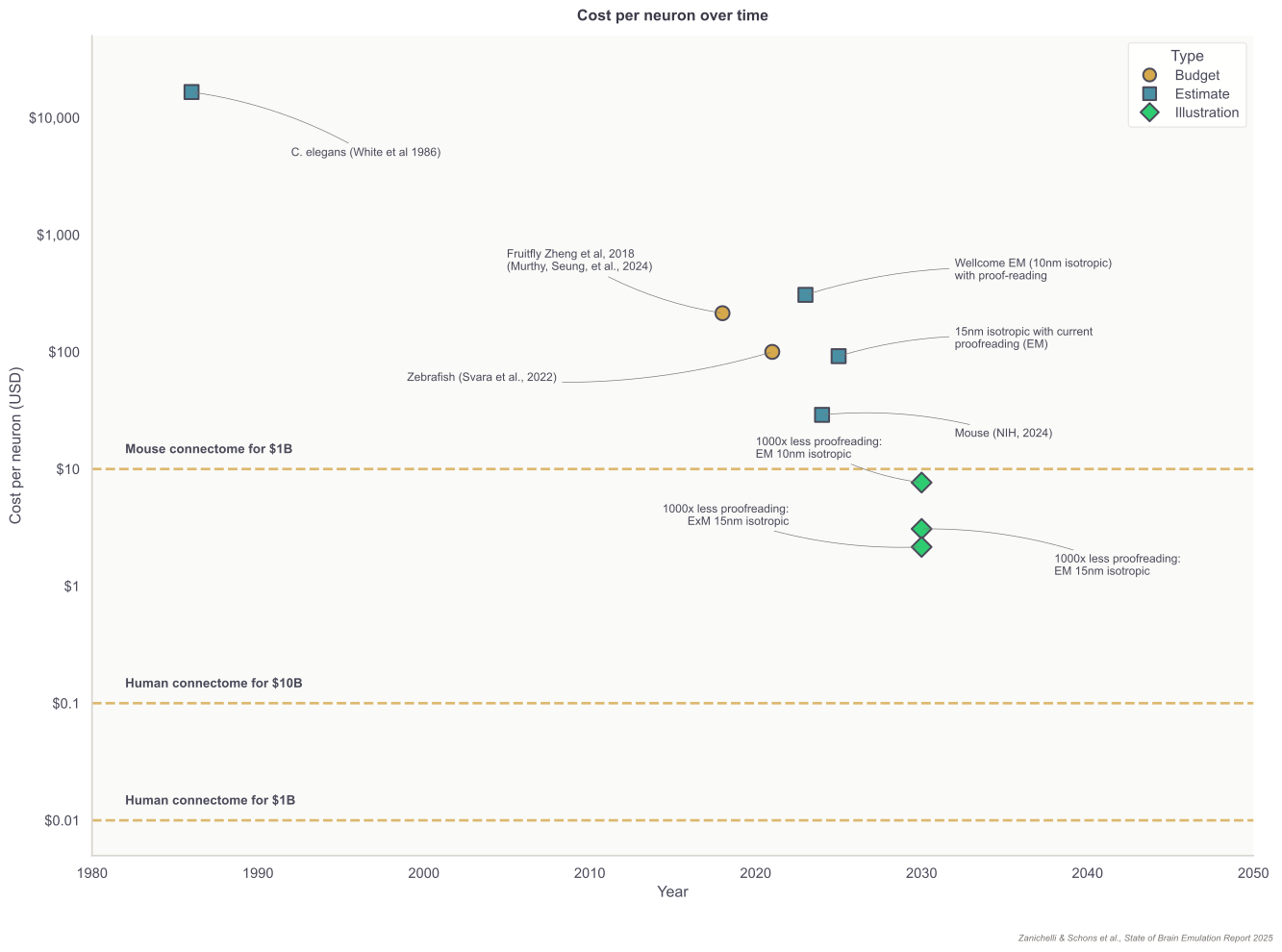
Complete connectomes at synaptic resolution currently exist only for small organisms. C. elegans has multiple whole-nervous-system reconstructions from individual specimens, with approximately ten datasets available. Adult Drosophila has fully proofread connectomes for both the male central nervous system and the female brain.
For larger organisms, progress remains at the proof-of-concept stage. In mice, the largest densely reconstructed volume is a cubic millimeter of visual cortex, containing approximately 120,000 neurons and 523 million automatically detected synapses.
more →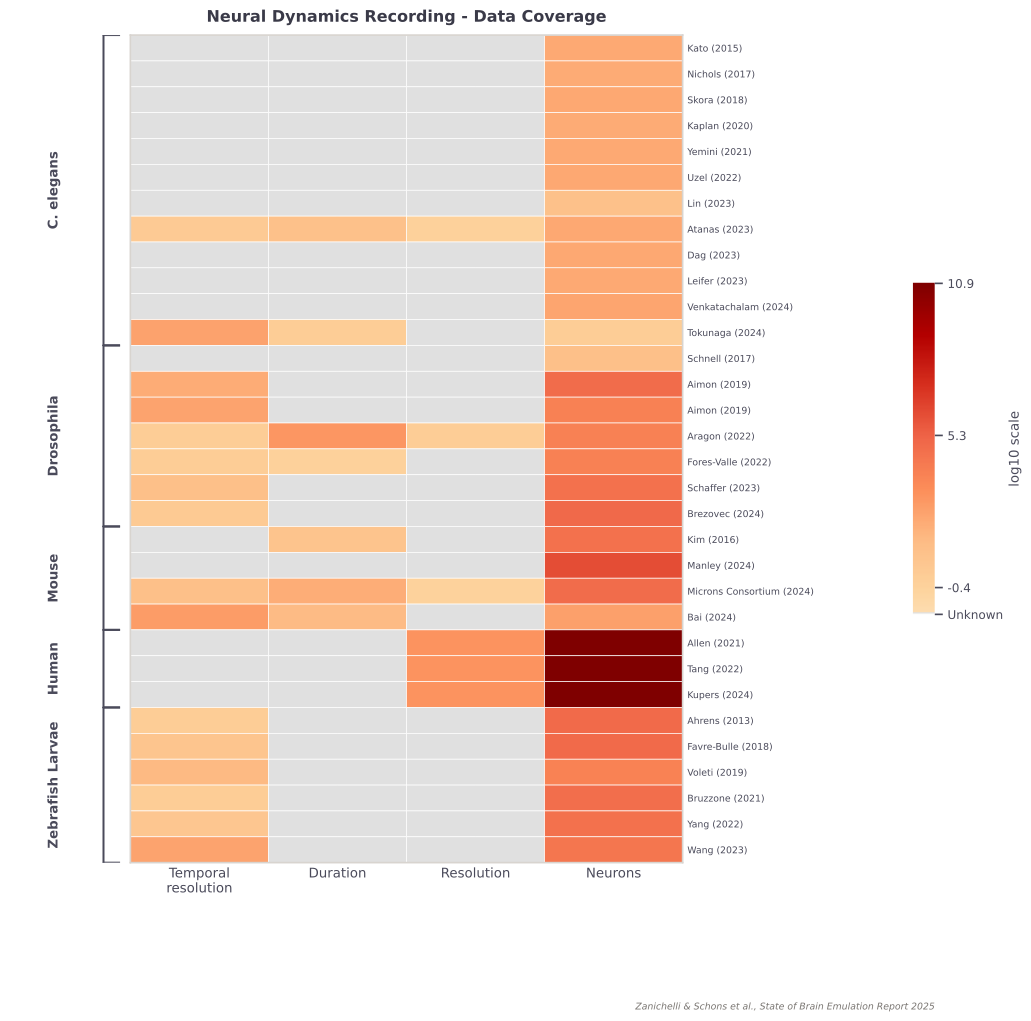
Meaningful progress toward whole-brain emulation is currently confined to small organisms where comprehensive datasets are becoming available. In C. elegans, multi-scale, closed-loop simulations now reproduce basic behaviors by integrating neural dynamics, body mechanics, and environmental interaction.
For Drosophila, the adult connectome has enabled models spanning the entire brain, successfully predicting neural responses and circuit functions for behaviors like feeding and grooming.
more →The section establishes the key distinction between simulation (matching outputs) and emulation (reproducing the causal machinery), and defines what we consider the minimum threshold for a model to qualify as an emulation at all.
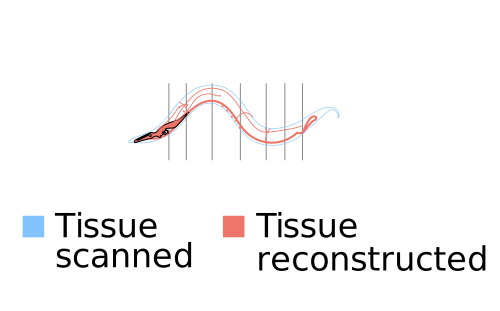 C. elegans
~300 neurons
C. elegans
~300 neurons
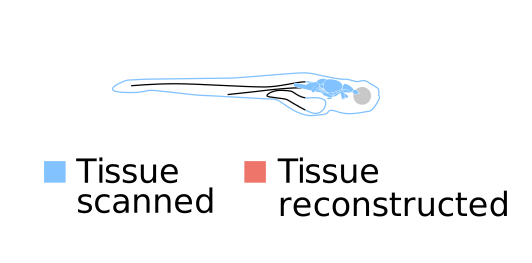 Zebrafish
~100K neurons
Zebrafish
~100K neurons
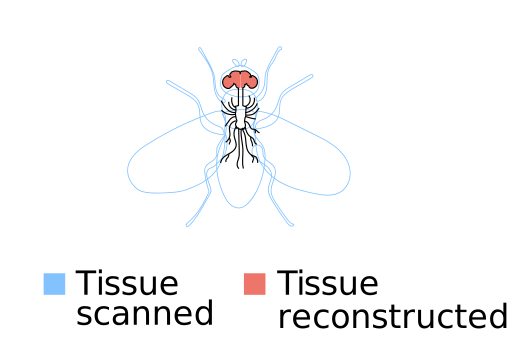 Fruit Fly
~140K neurons
Fruit Fly
~140K neurons
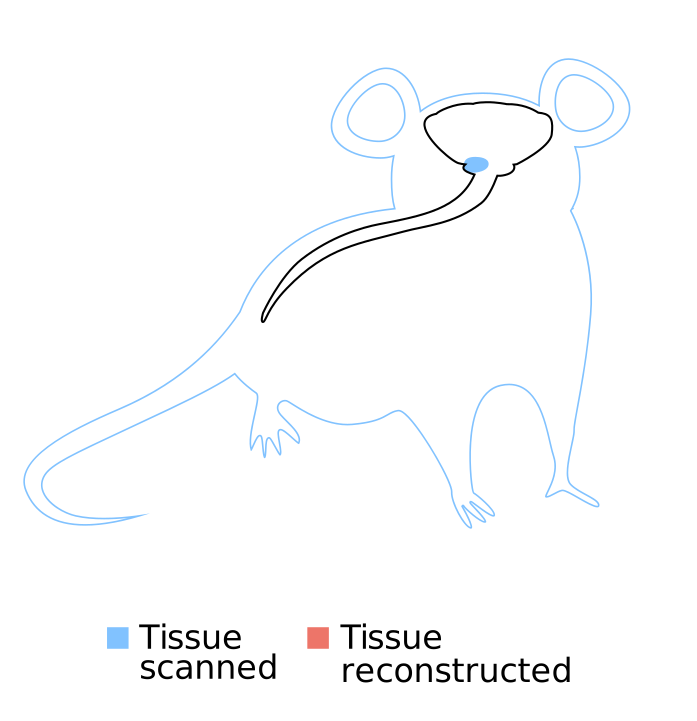 Mouse
~70M neurons
Mouse
~70M neurons
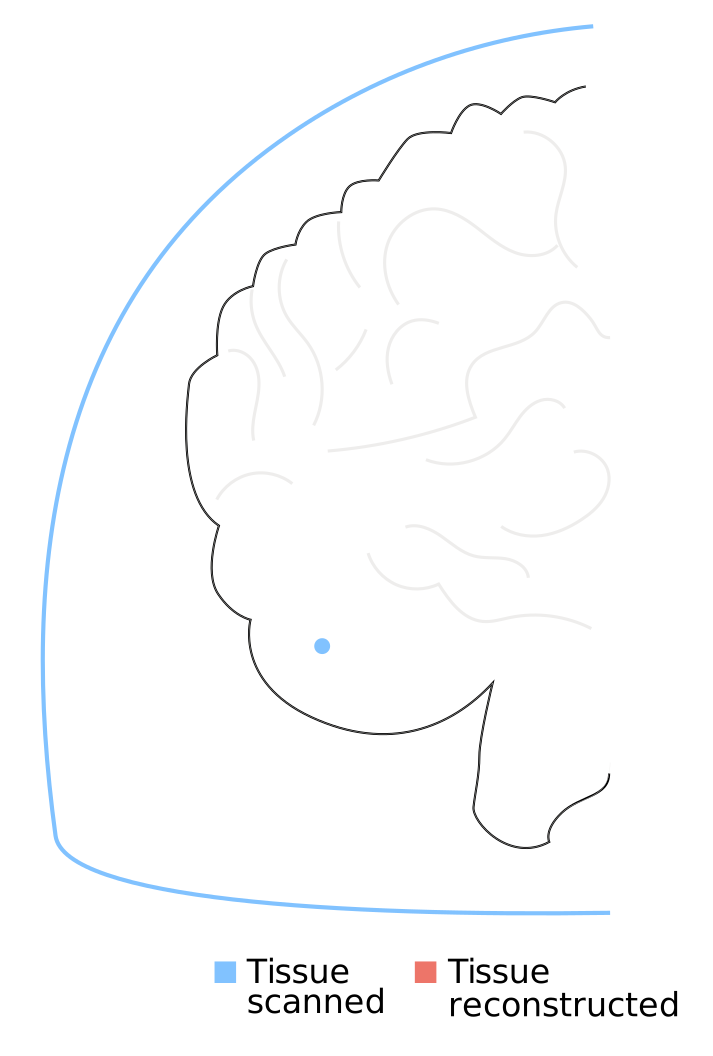 Human
~86B neurons
Human
~86B neurons
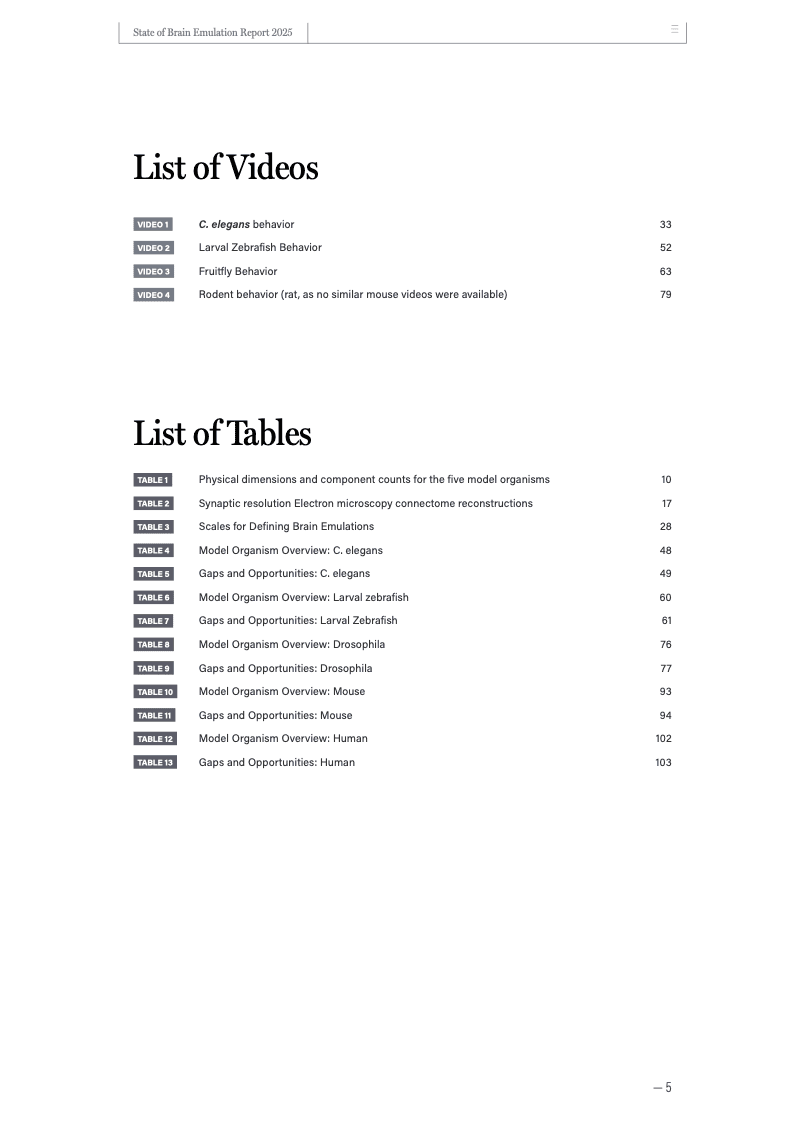
A systematic tour through five model organisms, from the 300-neuron worm to the 86-billion-neuron human brain. For each, we assess the current state of neural recording, connectomics, and computational modeling, then identify the key gaps blocking progress toward faithful emulation.
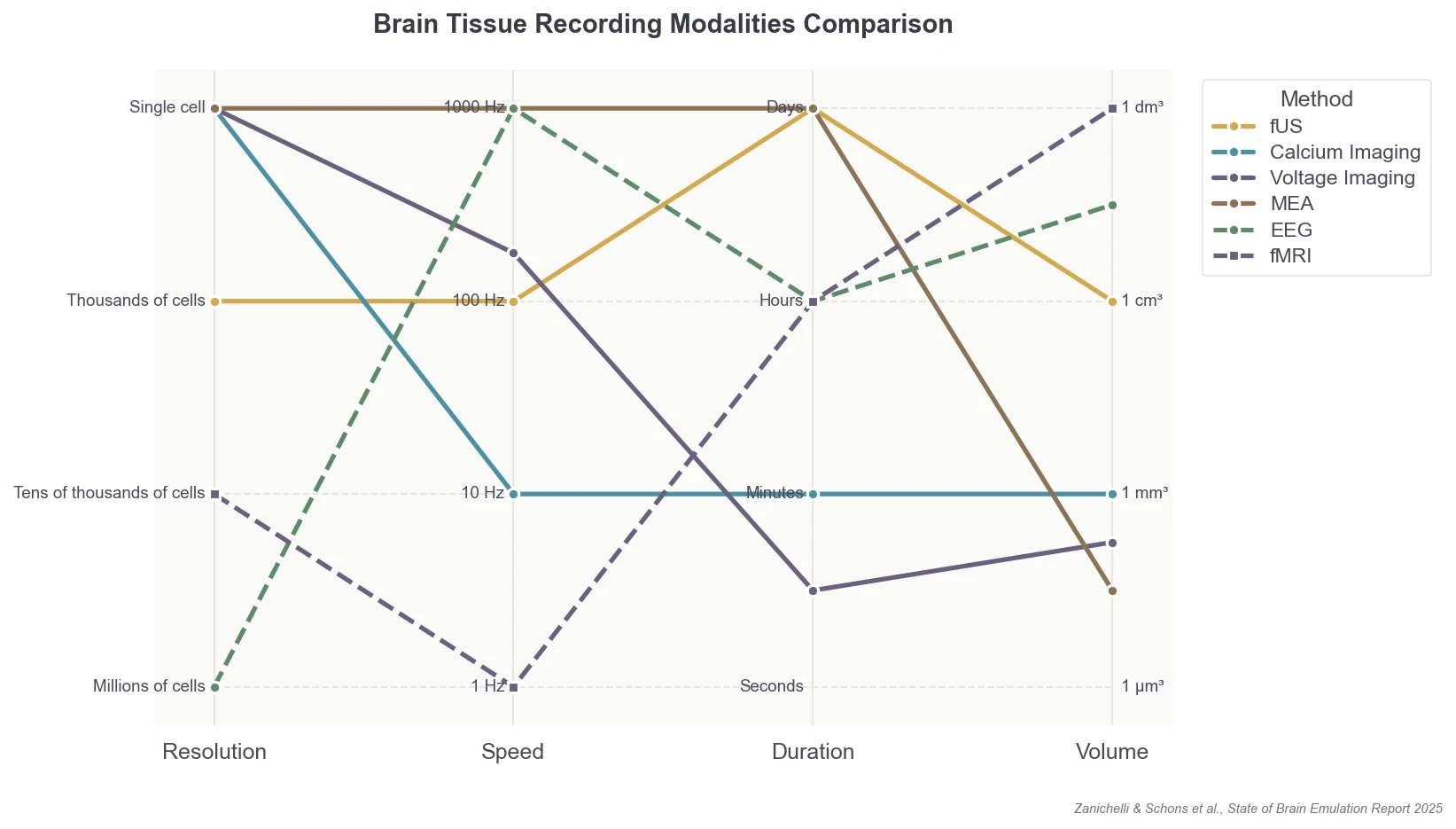
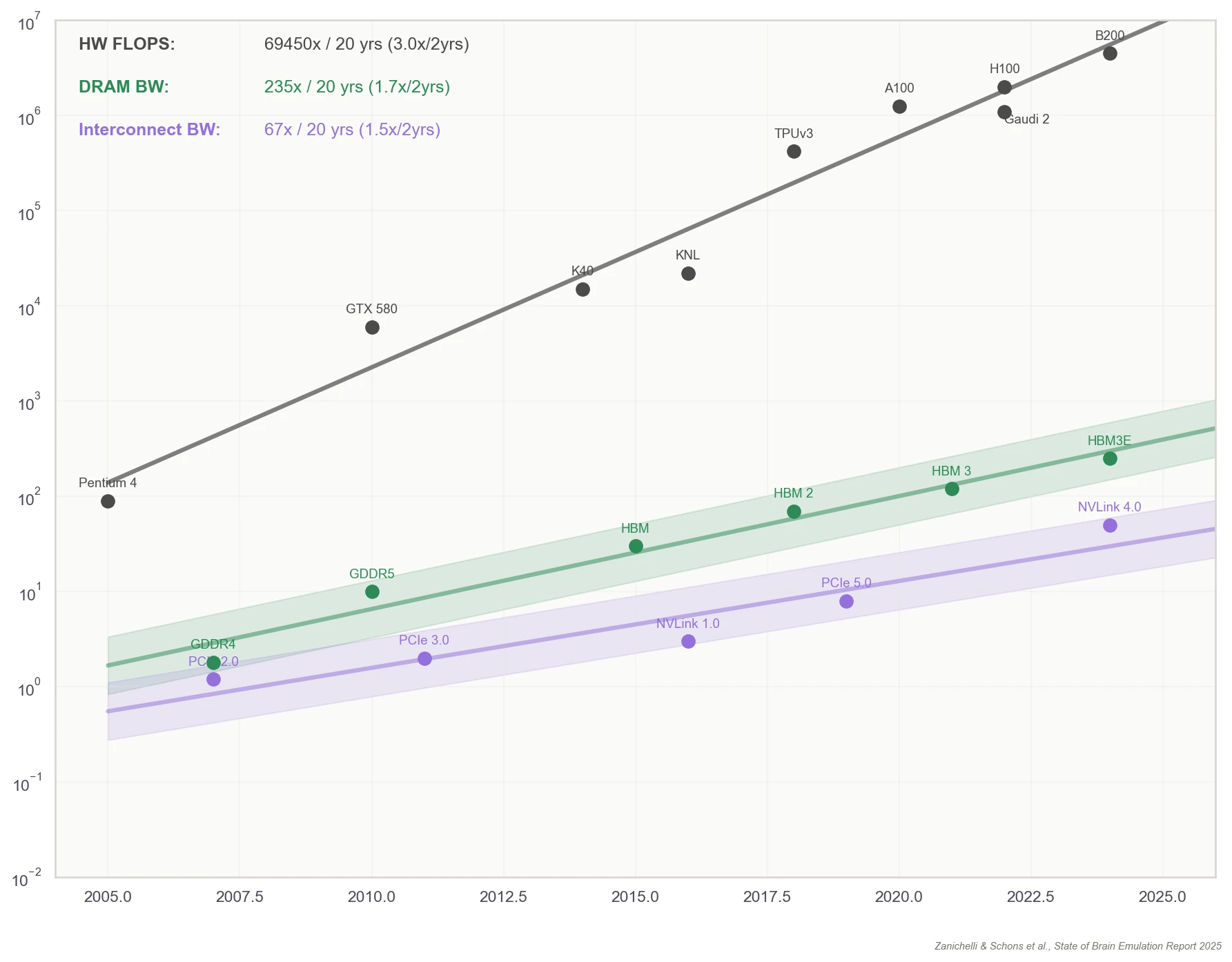
A technical deep-dive into the three pillars of brain emulation: recording neural activity (from patch clamps to calcium imaging), reconstructing structure (electron microscopy, expansion microscopy, barcoding), and simulating it all in silico (neuron models, synapse dynamics, hardware requirements). We cover what each method can and cannot do, what it costs, and where the bottlenecks lie.
You can find all of the data the report was built upon on our website. Explore our complete bibliography, figure library with downloadable graphics, and public data repository.
Dive deeper into the technical details, methodology, and comprehensive analysis.
Click to view and share quotes from the report
"It is hard to pinpoint numbers, but as of 2025 we estimate that less than 500 people globally are actively dedicated to the direct objectives of brain emulation. [...]
Such a small community means that every individual contributor's presence or absence can profoundly shape the field's trajectory. We hope this report will serve to attract new talent to this emerging and interdisciplinary endeavor."
— Preface, State of Brain Emulation Report 2025